
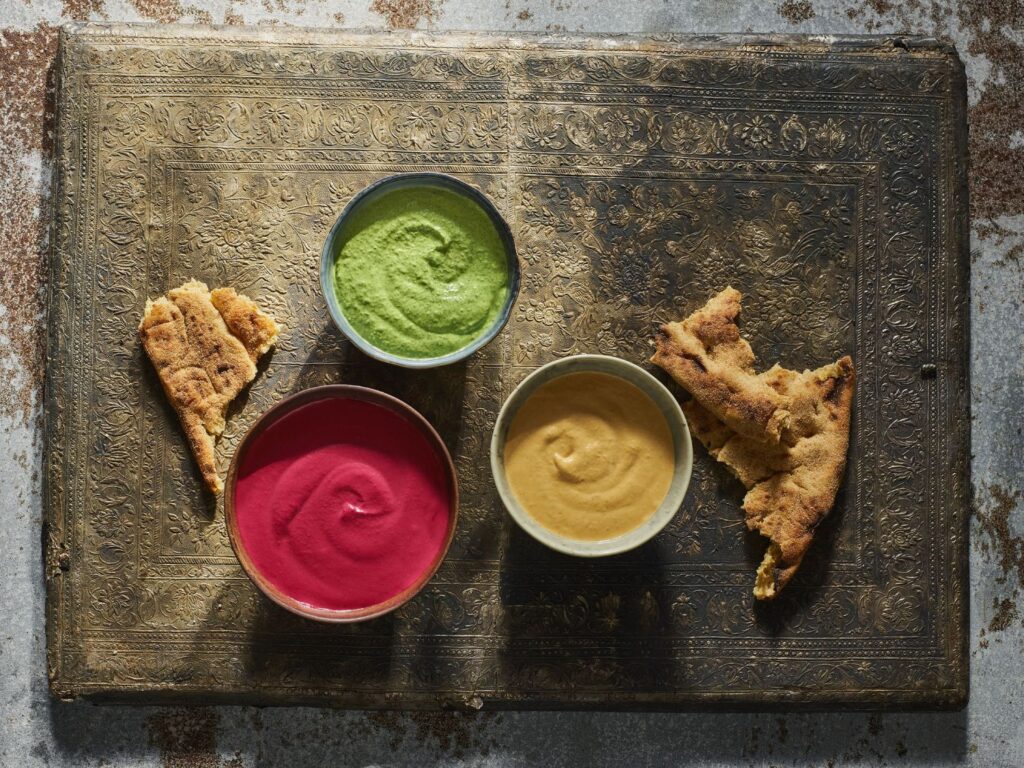
It shows up in hummus, gets drizzled over falafel, and finds its way into sauces, salads, and sweets across the Mediterranean world. Most people who cook with tahini regularly have never once questioned what it actually is or why it behaves the way it does. That’s worth fixing.
Tahini is one of those ingredients that feels simple until it isn’t. Add water and it seizes up rather than loosens. Leave the jar on a shelf and the oil climbs to the top. Stir it long enough and it transforms into something glossy and fluid that bears little resemblance to what you started with. Behind each of those behaviors is real chemistry, and it all begins with the seed.
A Small Seed Doing a Lot of Work
Sesame is among the oldest crops humans have ever cultivated for oil, and for good reason. Despite its size, a sesame seed packs in a remarkable concentration of useful things. Around half its weight is fat, most of it unsaturated. It contributes a meaningful amount of protein, somewhere between 17 and 20 grams per 100 grams of seeds, along with carbohydrates, fiber, and minerals including calcium, magnesium, iron, and phosphorus. It also contains a pair of antioxidant compounds called sesamin and sesamolin, which belong to a class known as lignans.
Most people picture sesame as small and pale, but the seed comes in several varieties including red, brown, and black. Tahini producers pay close attention to these differences, since oil content, hull thickness, and aromatic character all vary and all influence what ends up in the jar. Black sesame, for instance, carries a deeper, more pronounced flavor and is widely used across Asian cuisines. Whole brown sesame retains its outer hull, which means more fiber but also a slightly coarser character.
What Grinding Actually Does
Making tahini sounds straightforward: roast the seeds lightly, grind them down until smooth. But what happens at the microscopic level during that process is what makes tahini what it is.
Inside an intact sesame seed, oil is stored within countless tiny cells, each one sealed off from the next. As long as the seed stays whole, most of that oil stays trapped. Grinding breaks those cell walls open, releasing the oil in large quantities. What was once an orderly structure of millions of individual oil-filled chambers becomes something else entirely: a paste in which freed oil surrounds fine particles of protein, fiber, and carbohydrate. The seed has essentially been taken apart and reassembled into a completely different physical form. That reorganization is why tahini looks, moves, and behaves nothing like the seeds it came from.
Why It Lasts So Long
One of tahini’s less appreciated qualities is its staying power. Stored sensibly and kept uncontaminated, a jar of tahini can remain perfectly good for a surprisingly long time, and the reason comes down to water. Tahini contains very little of it. Bacteria, molds, and yeasts all need available moisture to establish themselves and multiply. Without it, they struggle to gain a foothold. No preservatives are needed. The seed’s own composition handles that quietly, the same way it always has.