
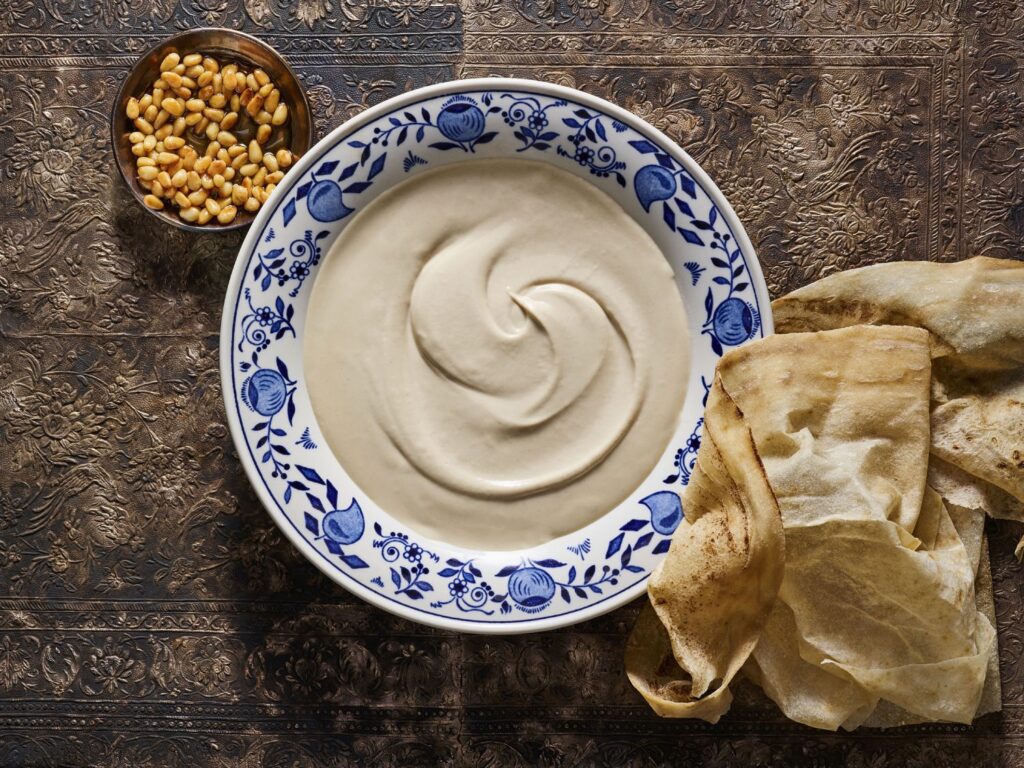
Open a jar of tahini that has been sitting on the shelf for a few weeks, especially one that has traveled a long way from Israel or elsewhere in the Middle East, and you will likely find the same thing every time: a pool of oil floating on top and a dense, almost brick-like mass settled at the bottom. The natural reaction is to wonder whether something has gone wrong. It has not. That separation is one of the clearest signs that what you are holding is the real thing.
Why It Happens
Tahini is made from one ingredient: ground sesame seeds. When sesame seeds are milled, they release their natural oils, and the resulting paste is a mixture of that oil and the heavier solid particles that remain after grinding. There are no stabilizers holding them together, no emulsifiers keeping the oil suspended. Left undisturbed, gravity does what it always does. The lighter oil rises to the top. The denser particles sink to the bottom. The longer the jar sits, and the farther it has traveled, the more pronounced the separation becomes.
This is not spoilage. It is physics. In fact, some food producers and longtime tahini enthusiasts point out that separation is actually a marker of purity. Brands that add extra oil or stabilizers to keep tahini looking uniform in the jar are masking what pure ground sesame naturally does over time.
How to Handle It
The most straightforward approach is to stir the contents of the jar thoroughly as soon as it is opened. If the paste at the bottom has become very compact, a butter knife or a long-handled spoon makes the job considerably easier. For jars with narrow openings, transferring the tahini to a wider container first can also help. The goal is simply to reincorporate the oil back into the solids until the texture is smooth and consistent throughout.
One technique worth knowing is storing the jar upside down before opening it. When a sealed jar is inverted, the oil gradually migrates toward what is now the bottom, which means it stays in closer contact with the denser paste below. Over several hours, this reduces the degree of separation and makes the eventual stirring much easier. It is a small habit with a noticeable payoff.
How Long Does It Stay Good
Because raw tahini contains very little water, it is an inhospitable environment for bacteria and mold. The more relevant concern over time is oxidation. The fats in sesame oil can break down when exposed to air and light, eventually producing off flavors that are distinctly bitter or stale. The signs that tahini has genuinely gone bad are easy to identify: a sharp unpleasant smell, a noticeably bitter or rancid taste, or any visible mold.
Short of those signs, properly stored tahini keeps well for many months after opening. The practical rules are straightforward. Stir before each use. Replace the lid immediately after to limit oxygen exposure. Store in a cool place away from direct light. Refrigeration is not strictly necessary but does slow oxidation, which is particularly useful in warmer climates or if the jar will not be used frequently.
A Sign of Quality, Not a Flaw
The oily layer that greets you when you open a tahini jar is easy to misread. It looks like
something has separated or deteriorated. In reality it is a natural consequence of what tahini is,
a product with no artificial help holding it together. Managing that separation takes about thirty
seconds of stirring. What you get in return is a paste made from nothing but sesame seeds,
exactly as it should be.